

from Quartz Mountain Resources Ltd. (CVE:QZM)
CORRECTION: Quartz Drilling Intersects 123 m of 0.79 g/t AuEQ and 315 m of 0.73 g/t AuEQ Discovering Gold-Rich Porphyry System and Significantly Expanding Prodigy Mineralization
Updating Previous Release which had same tables at bottom of Press Release
VANCOUVER, BC / ACCESS Newswire / November 3, 2025 / Quartz Mountain Resources Ltd. (TSXV:QZM)(OTC Pink:QZMRF) ("Quartz" or the "Company") is pleased to announce assay results from the Phase 3 drill program conducted on its Maestro property located 15 km north of Houston, British Columbia ("BC"). Quartz is targeting exciting precious metal mineral systems that occur up to several kilometers outboard of the large Lone Pine molybdenum deposit, all within the extensive Maestro Property. The Company's phased drill programs are currently focused on delineation drilling of its Prodigy Au-Ag-Mo-Cu discovery. The Phase 3 drilling program was completed during June through August, 2025 and comprised seven holes (PR25-07 through PR25-13) totalling 3,885 meters. Quartz's sequential drill programs (Phases 1 through 3) at Prodigy now total 8,346 meters across 13 holes (PR23-01 through PR25-13). This drilling has intersected three distinct types of mineralization which are closely integrated. They are Porphyry Au, Porphyry Cu-Mo or Mo-Cu and Epithermal Au-Ag-Mo-Cu. Quartz plans to mobilize Phase 4 drilling in early February, 2026 to continue further systematic delineation of Prodigy, and has a treasury of $2.6 million on hand.
Diamond drill hole PR25-13, the last hole of Phase 3, was drilled to test the west side of a northwest trending magnetic low feature referred to as the Prodigy "EYE" created by pervasive hydrothermal rock alteration and mineralization (see Figure 1). It intersected broad intervals of Au-Ag-Mo-Cu mineralized quartz-ankerite veins and breccia bodies from shallow depths representing a high to intermediate sulfidation epithermal mineral system. Below this Epithermal Au-Ag-Mo-Cu system the hole cut a newly discovered Porphyry Au mineral system continuously over some 340 meters. Highlight intervals from hole PR25-13 included:
From 122 m Downhole Depth:
123 m grading 0.23 g/t Au, 32 g/t Ag, 0.012% Mo and 0.07% Cu (0.79 g/t AuEQ)
Including 45 m grading 0.26 g/t Au, 44 g/t Ag, 0.008% Mo and 0.08% Cu (0.96 g/t AuEQ*)
From 369 m Downhole Depth:
315 m grading 0.39 g/t Au, 14 g/t Ag, 0.018% Mo and 0.04% Cu (0.73 g/t AuEQ)
Including 93 m grading 0.54 g/t Au, 9 g/t Ag, 0.050% Mo and 0.03% Cu (1.00 g/t AuEQ)
*For AuEQ see notes to Tables.
Bob Dickinson, Chairman of Quartz commented, "Prodigy is a very exciting precious metal discovery. Over three sequential phases our drilling has produced impressive results and geological knowledge. We have intersected three classic but integrated mineral deposit types; extensive epithermal gold and silver mineralization, a new porphyry gold discovery and porphyry copper-molybdenum mineralization. Adding to the potential is our age dating of Prodigy gold-silver mineralization compares favorably to the age of the mineralizing event at BC's new Blackwater Gold Mine. We have funding in hand to start further drilling as soon as we can in early 2026", he concluded.
Assay results from Quartz's seven, Phase 3 core holes are listed in Table 1 and the earlier completed and previously announced Phase 1 core holes and Phase 2 core holes are listed in Table 2. For completeness, results from six historical core holes drilled in the period 2007-2011 by a past operator in the "EYE" area are listed in Table 3.
All these holes have intersected Epithermal Au-Ag-Mo-Cu mineralization hosted within earlier deposited Porphyry Mo-Cu mineralization (see Figure 2). In addition, a number of these holes have intersected pervasively altered intrusive rock (quartz monzonite) enriched in gold and classified as Porphyry Au mineralization. Also listed in Table 4 are results from four historical holes located outside to the east of the Prodigy "EYE". These holes intersected a major Porphyry Mo-Cu system which is distinct from the adjacent Prodigy Epithermal Au-Ag-Mo-Cu discovery and Porphyry Au mineralization. Notably, drill holes located at the northeast portion of the "EYE" show increasing copper grades indicating the potential for a Cu dominant porphyry located northeast of the "EYE" (see Figures 2, 5, and 6). The holes with anomalously increasing Cu grades are listed in Table 5.
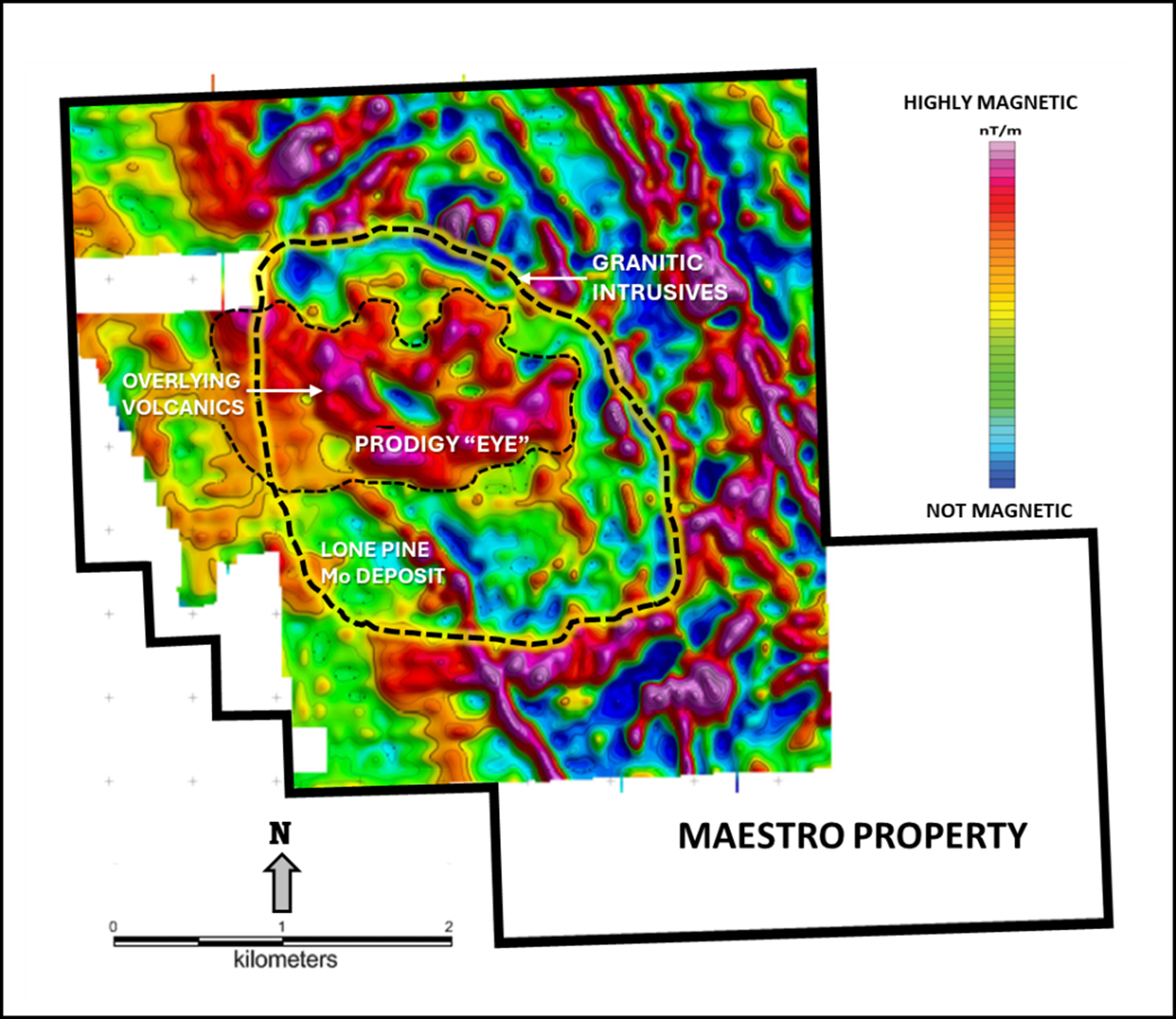
Three distinct types of mineralization have been intersected at Prodigy (See Figures 2, 3, 4, 5, 6, 7 and 8).
Porphyry Au Mineralization
An intrusive body (quartz monzonite) at depth, along with the surrounding volcanic rocks (andesite) host a distinct style of mineralization characterized by pervasive green sericite alteration enriched in gold. Much of the gold mineralization is associated with pyrite rich zones, either as disseminated mineralization or massive, vein-type pyrite. The disseminated pyrite and pyriterich zones within and around the quartz monzonite are classified as Porphyry Au mineralization.
Porphyry Mo-Cu (Mo dominant) and Cu-Mo (Cu dominant) Mineralization
The quartz monzonite and the overlying volcanic rocks are affected by strong K-feldspar and biotite alteration, respectively. Both host rocks are cut by quartz Mo-Cu veins. This early porphyry-type Mo-Cu mineralization has been intersected in several drill holes located on the east and northeast of the "EYE". Notably, drilling has identified increasing Cu grades to the northeast, indicating a potential Porphyry Cu-Mo deposit target located northeast of the Prodigy "EYE" (see Table 5 and Figures 2, 5 and 6). Hole BD-11-70 intersected 151 m grading 0.12% Cu and 0.04% Mo, hole BD-11-68 intersected 107 m grading 0.10% Cu and 0.08% Mo, hole PR25-10 intersected 92 m grading 0.11% Cu and 0.04% Mo, and hole PR25-11 intersected 90 m of 0.16% Cu and 0.04% Mo.
Epithermal Au-Ag-Mo-Cu Mineralization
The early porphyry Mo-Cu mineralization is cut and overprinted by a stockwork of quartz-ankerite veins and vein breccias containing molybdenite, tetrahedrite, chalcopyrite, pyrite, and locally sphalerite and galena assemblages typical of high-to intermediate Au-Ag sulfidation systems developed above porphyry deposits. Breccia bodies occur within the quartz-ankerite vein zone and are associated with intense green sericite alteration. This alteration has destroyed mafic minerals and magnetite, producing the observed low magnetic "EYE" anomaly.
The vein and breccia system hosting the high to intermediate Au-Ag sulfidation mineralization forms an elongated body trending northwest with a funnel shape to depth. Drilling to date has indicated this mineral body is approximately 50-200 m wide, 400 m deep, and 300 m long. It is wide open to the north, south and west.
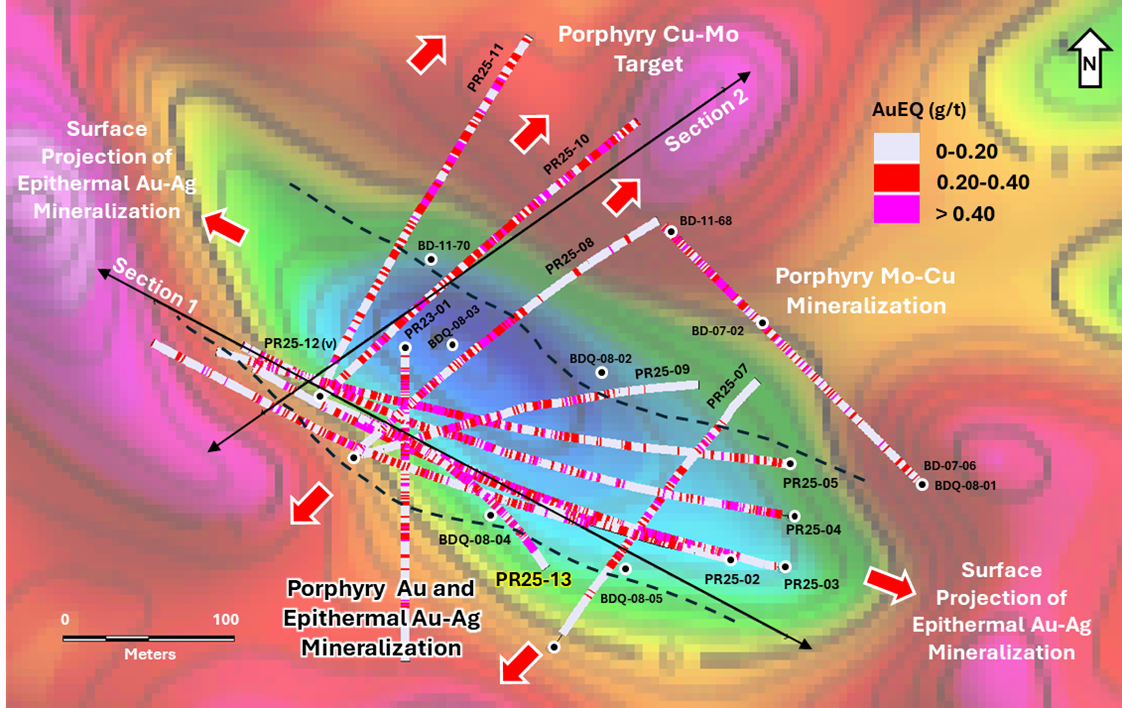
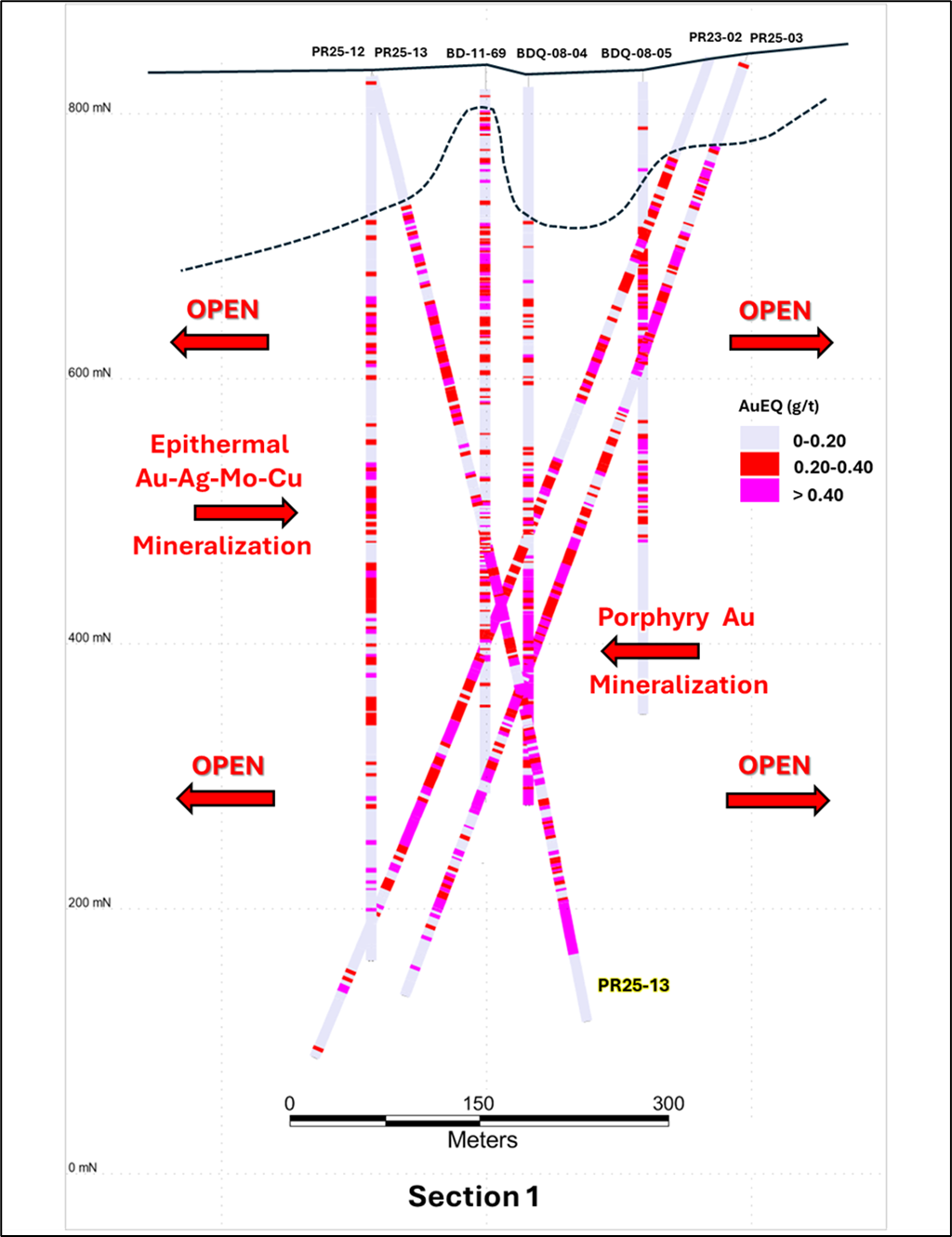
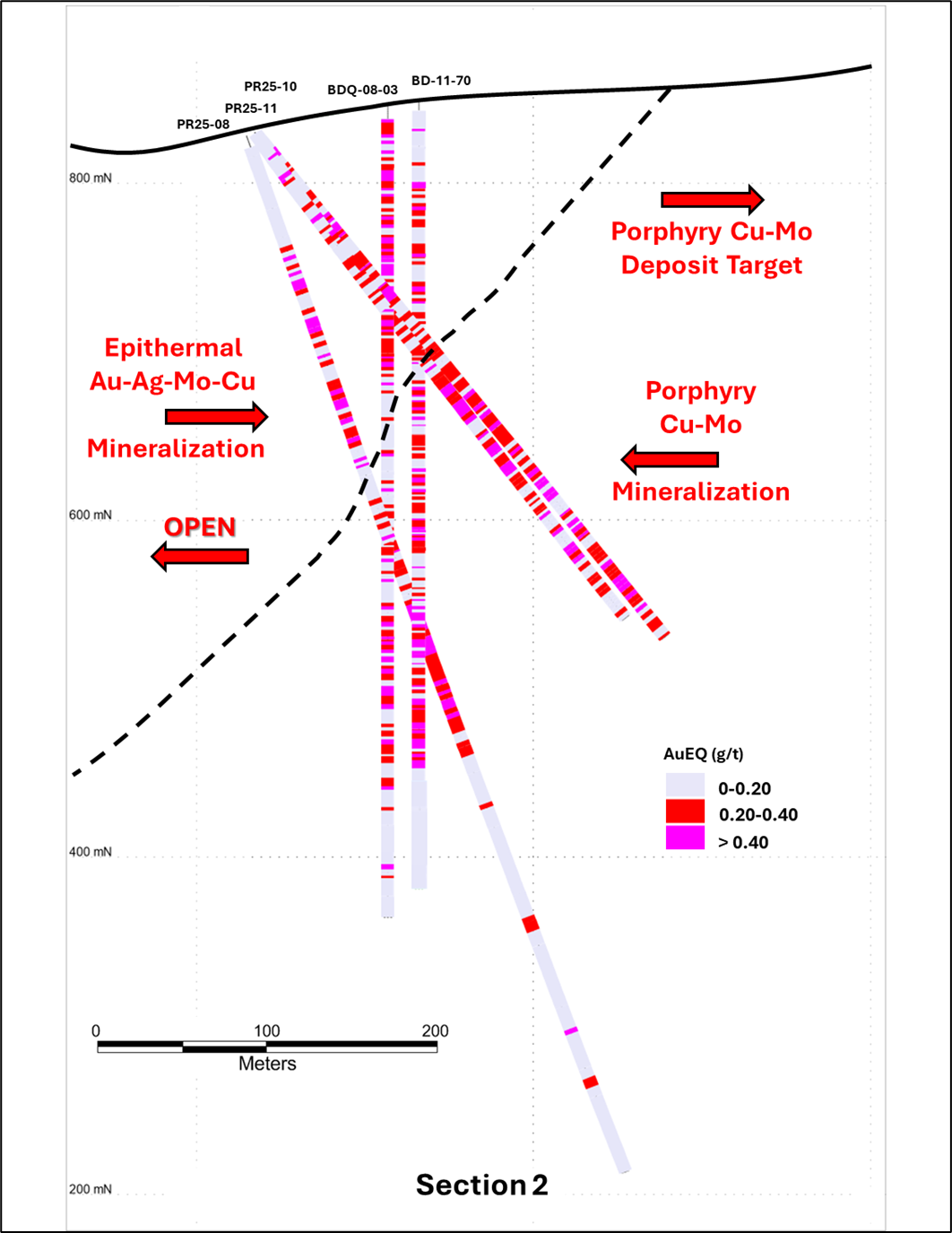
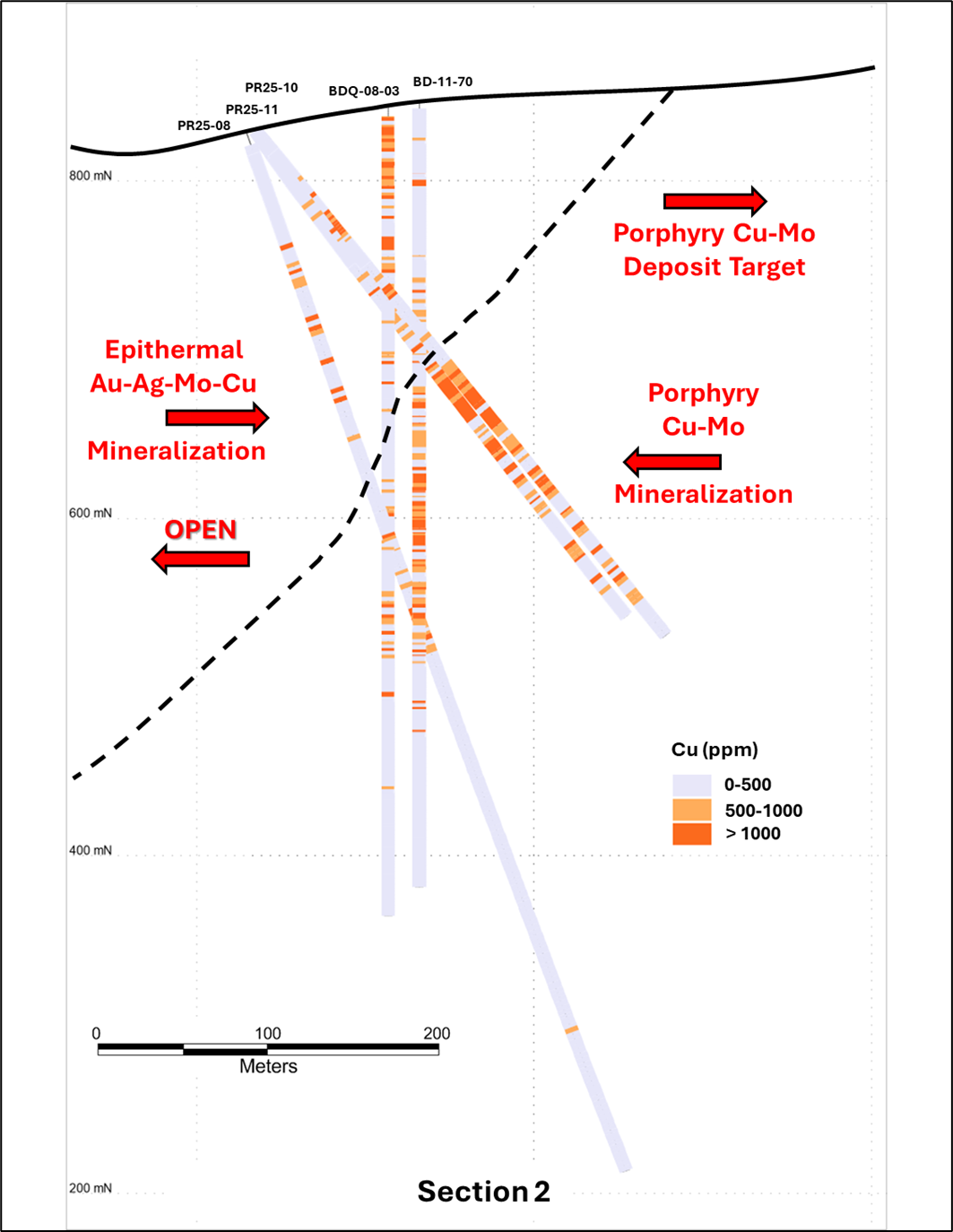
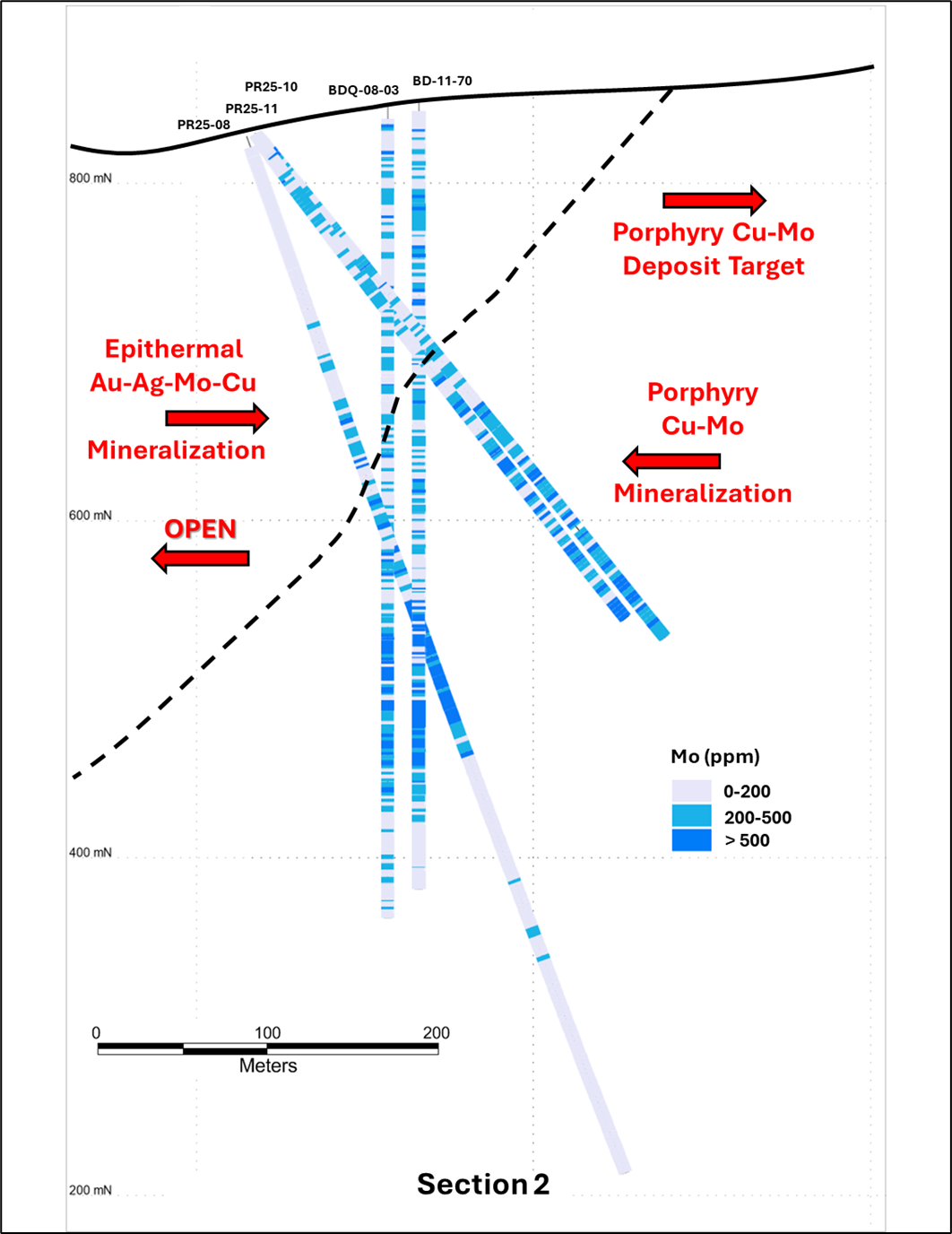
Figure 7. Representative Prodigy Rock and Mineral Samples.
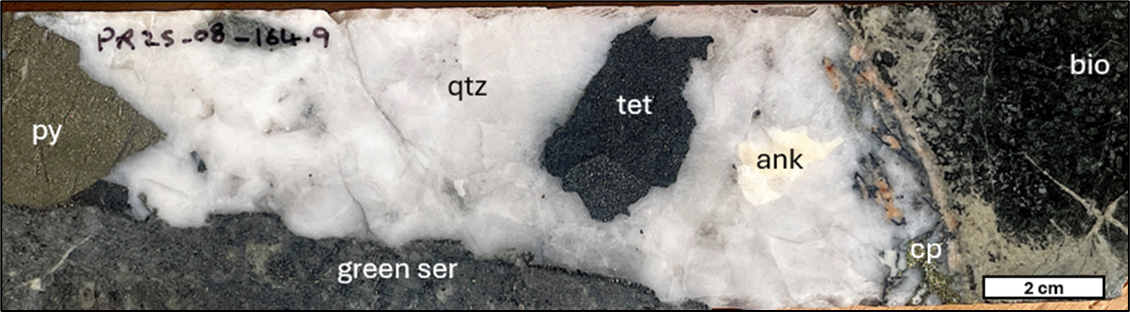
PR25-08 at 165 m - Andesite with green sericite alteration cut by high-sulfidation type quartz-ankerite veins with coarse tetrahedrite, pyrite, and chalcopyrite. This sample represents Epithermal Au-Ag mineralization, starting at shallow depths, and grades 0.29 g/t Au and 229 g/t Ag (from a 3 m sample interval).
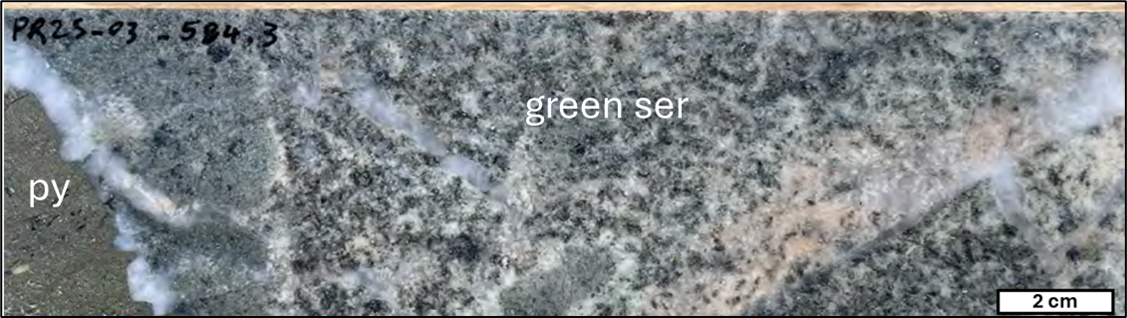
PR25-03 at 584 m - Quartz monzonite with remnants of pink K-feldspar overprinted by strong pervasivecoarse green sericite alteration with disseminated pyrite and trace tetrahedrite, cut by quartz-ankerite vein with massive coarse pyrite. This sample represents Porphyry Au mineralization and grades 0.64 g/t Au and 84 g/t Ag (from a 2 m sample interval).
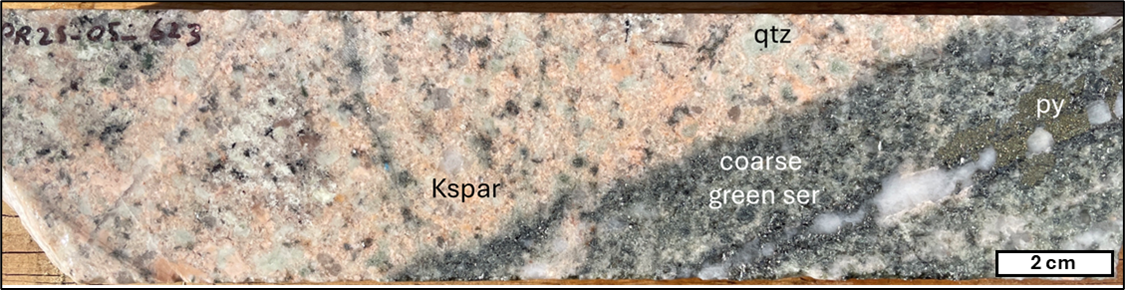
PR25-05 at 623 m - Quartz-monzonite with K-silicate alteration, overprinted by green sericite, and cut by quartz-pyrite veins. This sample represents gold-rich porphyry mineralization and grades 0.92 g/t Au and 6 g/t Ag (from a 2.8 m sample interval).
Abbreviations: py=pyrite, cp=chalcopyrite, tet=tetrahedrite, qtz=quartz, ank=ankerite, Kspar=K-feldspar, bio=biotite, ser=sericite.
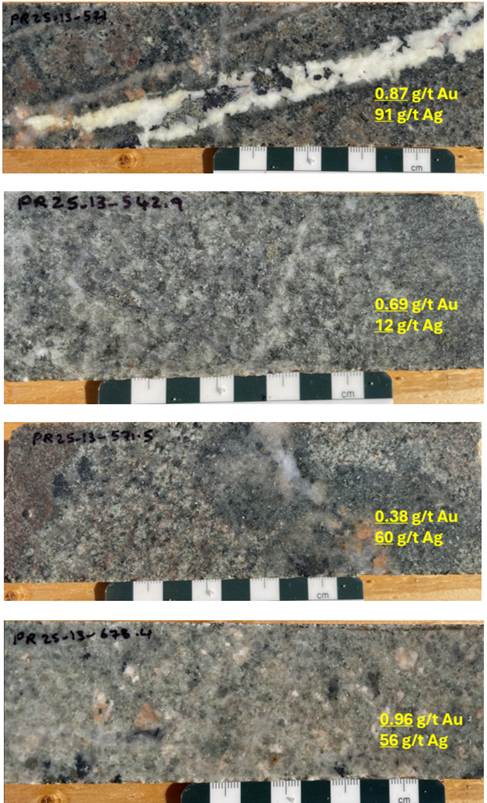
Figure 8. Core Photos of Au-Rich Porphyry Discovery from Hole PR25-13.
Grades Shown are from 3 m - Sample Intervals.
Age of the Mineralization
A total of four core samples were selected to determine the age of intrusive emplacement and related sulfide mineralization at Prodigy. These include two intrusive rock samples for U-Pb zircon age dating. The U-Pb zircon analyses of the two intrusive samples are currently in progress at the Mineral Deposit Research Unit at the University of British Columbia.
Two samples were also collected for Re-Os molybdenite age dating. One from the early quartz molybdenite-copper veins representing the Porphyry Mo-Cu mineralization stage, and another from a quartz-ankerite-tetrahedrite-molybdenite vein corresponding to the Epithermal Au-Ag-Cu-Mo stage of mineralization. Results from the Re-Os dating completed at the University of Alberta and indicate a Late Cretaceous age for both mineralization stages: 67.75 ± 0.38 Ma for the porphyry Mo-Cu type and 67.08 ± 0.35 Ma for the Au-Ag-Mo-Cu epithermal type mineralization. The overlapping age ranges suggest that the mineralization events were broadly contemporaneous and indicate that Prodigy represents a single, integrated porphyry-to-epithermal Au-Ag system.
The Prodigy system exhibits strong similarities in both mineralization style and alteration assemblages as well as age, to the Blackwater Au-Ag deposit in central British Columbia. The association of Au mineralization with green sericite overprinting earlier biotite alteration at Blackwater closely parallels the Porphyry Au mineralization observed at Prodigy. The main Au mineralization stage at Blackwater, hosted by green sericite alteration, is dated at 65±0.9 Ma (Ar-Ar age: Looby, 2015), which is comparable to the 67.08 ± 0.35 Ma age of the green sericite-hosted Epithermal Au-Ag-Cu-Mo mineralization at Prodigy. However, at Prodigy a clearer transition and genetic link to the underlying gold-rich porphyry center is evident, highlighting its integrated porphyry-epithermal evolutionary continuum.
The Blackwater Gold Mine owned by Artemis Gold Inc., was recently permitted and put into production. At Blackwater Mine, the base case cut-off grade within the reasonable prospects of an eventual economic extraction conceptual pit is 0.20 g/t Au EQ. The Blackwater Base Case Mineral Resource Estimate at a 0.20 g/t AuEQ cut-off on May 5, 2020 was 597 million tonnes grading 0.61 g/t Au and 6.4 g/t Ag (0.65 g/t AuEQ)A,B:
Bird, S, et al (2024) Blackwater Gold Mine, British Columbia, NI 43-101 Technical Report on 2024 Expansion Study prepared for: Artemis Gold Inc., effective date: 21 February, 2024 available at https://www.artemisgoldinc.com/blackwater-project/blackwater-gold-project/technical-reports/. The Mineral Resource has been confined by a conceptual pit shell to meet "reasonable prospects of eventual economic extraction" using the following assumptions: the 143% price case with a Base Case of US$1,400/oz Au and US$15/oz Ag at a currency exchange rate of 0.75 US$ per C$; 99.9% payable Au; 95.0% payable Ag; US$8.50/oz Au and US$0.25/oz Ag offsite costs (refining, transport, and insurance); a 1.5% NSR royalty; and uses a 93% metallurgical recovery for gold and 55% recovery for silver. The AuEq values were calculated using US$1,400/oz Au, US$15/oz Ag, a gold metallurgical recovery of 93%, silver metallurgical recovery of 55%, and mining smelter terms for the following equation: AuEq = Au g/t + (Ag g/t x 0.006).
The Qualified Person has been unable to verify this Resource Estimate, and this information is not necessarily indicative of mineralization on the Maestro Property.
TABLE 1
Phase 3 Prodigy "EYE" Assay ResultsA | ||||||||||
Drilling Program | Drill Hole | Incl. | From | To | Int.1,2,3 | AuEQ4 | Au | Ag | Mo | Cu |
Phase 3 | PR25-07 | 146.8 | 284.7 | 137.9 | 0.47 | 0.14 | 12 | 0.023 | 0.04 | |
incl. | 231.0 | 252.0 | 21.0 | 0.97 | 0.34 | 38 | 0.015 | 0.05 | ||
312.0 | 321.0 | 9.0 | 1.72 | 0.07 | 16 | 0.164 | 0.32 | |||
PR25-08 | 69.0 | 195.0 | 126.0 | 0.80 | 0.09 | 45 | 0.012 | 0.06 | ||
566.0 | 568.9 | 2.9 | 7.63 | 6.57 | 79 | 0.001 | 0.06 | |||
PR25-09 | 81.0 | 114.0 | 33.0 | 0.29 | 0.06 | 12 | 0.006 | 0.03 | ||
126.0 | 203.8 | 77.8 | 0.52 | 0.12 | 20 | 0.014 | 0.05 | |||
PR25-10 | 68.0 | 84.7 | 16.8 | 0.92 | 0.11 | 21 | 0.020 | 0.30 | ||
101.0 | 133.0 | 32.0 | 0.63 | 0.12 | 23 | 0.021 | 0.07 | |||
190.2 | 282.0 | 91.8 | 0.43 | 0.02 | 2 | 0.038 | 0.11 | |||
PR25-11 | 36.0 | 39.0 | 3.0 | 0.71 | 0.42 | 4 | 0.033 | 0.03 | ||
69.0 | 72.0 | 3.0 | 0.61 | 0.13 | 22 | 0.020 | 0.06 | |||
192.0 | 276.0 | 84.0 | 0.54 | 0.03 | 2 | 0.043 | 0.16 | |||
incl. | 201.0 | 207.0 | 6.0 | 0.86 | 0.12 | 6 | 0.008 | 0.44 | ||
324.1 | 330.0 | 5.9 | 0.77 | 0.02 | 6 | 0.089 | 0.10 | |||
PR25-12 | 153.0 | 429.0 | 276.0 | 0.40 | 0.08 | 8 | 0.023 | 0.06 | ||
incl. | 171.0 | 214.5 | 43.5 | 0.50 | 0.05 | 13 | 0.011 | 0.15 | ||
incl. | 297.0 | 426.0 | 129.0 | 0.52 | 0.13 | 11 | 0.033 | 0.04 | ||
and | 297.0 | 308.0 | 11.0 | 0.79 | 0.51 | 6 | 0.018 | 0.07 | ||
and | 423.0 | 426.0 | 3.0 | 6.64 | 0.49 | 400 | 0.060 | 0.63 | ||
456.0 | 459.0 | 3.0 | 1.40 | 0.95 | 14 | 0.039 | 0.03 | |||
549.0 | 552.0 | 3.0 | 2.17 | 0.89 | 94 | 0.002 | 0.08 | |||
582.0 | 585.0 | 3.0 | 1.15 | 0.95 | 13 | 0.001 | 0.02 | |||
PR25-13 | 122.0 | 245.3 | 123.3 | 0.79 | 0.23 | 32 | 0.012 | 0.07 | ||
incl. | 122.0 | 167.0 | 45.0 | 0.96 | 0.26 | 44 | 0.008 | 0.08 | ||
312.9 | 315.0 | 2.1 | 3.11 | 1.62 | 25 | 0.010 | 0.79 | |||
369.8 | 685.6 | 315.8 | 0.73 | 0.39 | 14 | 0.018 | 0.04 | |||
incl. | 369.8 | 462.8 | 93.1 | 1.00 | 0.54 | 9 | 0.050 | 0.03 | ||
and | 369.8 | 441.4 | 71.6 | |||||||